Building Resilient Facilitators for Transformation and Inclusion
VIHASA Facilitator Training | Nelson Mandela University | May 2026
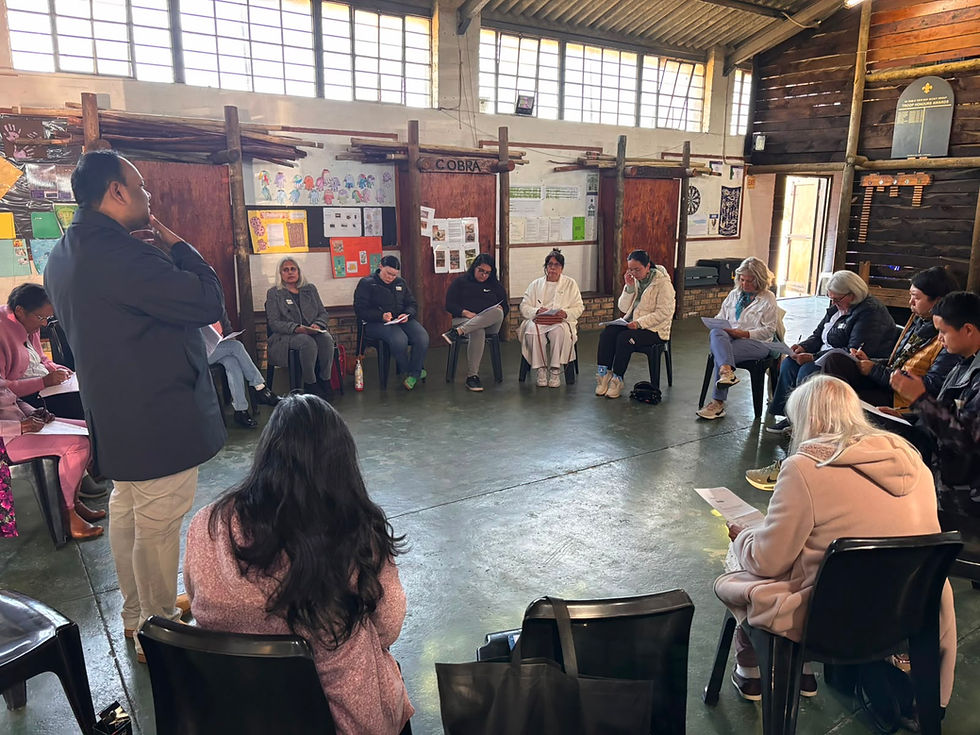
From 26–29 May 2026, the Values in Healthcare Association of South Africa (VIHASA), in partnership with Nelson Mandela University (NMU), conducted a four-day Facilitator Training Programme at the Bird Street Campus in Gqeberha.
The training brought together professionals from higher education, government and civil society who work closely with student support, transformation, diversity and inclusion, gender-based violence prevention, disability support, equality promotion and community development.
Seventeen participants completed the training, representing:
Nelson Mandela University Transformation Office
Walter Sisulu University – Queenstown and Mthatha campuses
Rhodes University
University of Fort Hare – Alice and East London
Department of Social Development
DOXA Family Care and NGO partners
The group included social workers, counsellors, programme managers, transformation officers, equality promotion coordinators, anti-GBV coordinators and senior leaders supporting students, staff and communities.
Learning Through Experience
The programme introduced participants to the VIHASA methodology through practical, experiential learning.
The first day began with an introduction to VIHASA, followed by an experience of the Values module. Participants explored facilitation skills, group process techniques and ways of creating psychologically safe learning environments.
Over the following two days, participants practised their facilitation skills and received structured feedback while facilitating components of the Cooperation and Positivity modules.
The final day focused on implementation planning, encouraging participants to identify opportunities to integrate VIHASA into university programmes, student leadership initiatives, staff wellness activities, social development programmes and NGO interventions.
Throughout the programme, the approach was highly participatory, combining reflection, dialogue, experiential learning and peer feedback.
What the Evaluation Showed
The participant evaluations demonstrated exceptionally high levels of satisfaction and confidence.
Overall satisfaction was consistently rated as excellent, with facilitator effectiveness receiving the highest ratings across the group. Resource materials and manuals were also rated very positively.
Most participants reported confidence levels of 8–10 out of 10 in applying the facilitation skills they had learned, while 13 participants gave a perfect 10/10 likelihood of recommending the programme to others.
Importantly, all participants indicated that they intended to apply their learning within their professional contexts.
Two significant outcomes emerged from the evaluation: enhanced facilitation competence and personal renewal and wellbeing.
Growing as Facilitators
Participants reported increased confidence in:
Experiential facilitation
Group process management
Appreciative inquiry
Conflict-sensitive facilitation
Reflective exercises
Interactive learning methodologies
A particular highlight was the “90–10” facilitation principle, which encourages participants to take ownership of the learning process and remain actively engaged, rather than relying on facilitator-driven delivery.
The training demonstrated that facilitation is not simply about delivering information. It is about creating an environment where people can participate, reflect, discover and learn from one another.
Personal Renewal and Wellbeing
One of the most significant findings was the impact the programme had on participants personally.
Many of the professionals attending work in emotionally demanding environments where exposure to trauma, conflict and crisis is commonplace.
Participants repeatedly described the training as restorative, therapeutic and renewing.
The experience reminded many of the importance of self-care, reflection, mindfulness and positivity in sustaining their work and supporting others.
This was an important dimension of the training. While participants came to develop skills to facilitate learning in their workplaces, they also discovered opportunities to pause, reflect and reconnect with themselves.
Participant Voices
The participant evaluations captured the personal impact of the experience.
One Transformation Officer from NMU shared:
“At first I thought it would be this tense training on how to be the best facilitator only, but it also gave me a space to reflect on myself, to be self-aware, how to show up for myself to be able to show up for others.”
A Manager/Lecturer from Walter Sisulu University reflected:
“The training served as a renewal to me. It reminded me of who I am and what I am capable of doing in my life.”
A counsellor from NMU said:
“I honestly did not limit the training with expectations. I wanted to just get here, be surprised and immerse myself into the moment and sessions. I thoroughly enjoyed the experience.”
From DOXA Family Care, the Head of Programmes highlighted the importance of self-care:
“Being probed to be more intentional about caring for myself, my health and my overall wellbeing was one of the most valuable aspects.”
Developing Professional Confidence
Participants also described how the training strengthened their professional skills and confidence.
One NMU Social Inclusion and Diversity Manager said:
“I am confident that I understand the programme and I am ready to start facilitating at work.”
A Social Work Intern from the University of Fort Hare shared:
“I got new facilitation skills from the training and enhanced my public speaking because I was given an opportunity to facilitate.”
Another participant reflected:
“The methodology is really great. I will borrow this model in training student leaders in facilitation.”
And an NMU Transformation Officer captured an important shift in understanding:
“I learned that facilitation should not be tense. It should be fun, engaging and include activities.”
Supporting Wellbeing and Preventing Burnout
The connection between facilitation, wellbeing and burnout prevention was another important theme.
A Social Work Supervisor from the Department of Social Development commented:
“This may help with burnout, especially if implemented in my office.”
A Social Worker from Walter Sisulu University described the experience as:
“This one was more than facilitation. It was therapeutic for me as well.”
An NMU Transformation Officer highlighted the grounding effect of the experiential practices:
“Meditation and visualisation were grounding moments where we had to be in tune with our feelings.”
Another participant simply expressed:
“I did not know how much I needed this.”
The Tunnel of Appreciation
The training concluded with a powerful “Tunnel of Appreciation” exercise.
Participants walked through a tunnel formed by their colleagues while others shared words of appreciation and identified positive qualities they saw in each person.
The experience proved deeply moving.
Many participants reported feeling genuinely recognised and valued, in some cases for the first time in a long while. Tears, laughter and heartfelt expressions of gratitude reflected the power of appreciation and human connection.
For professionals who work every day with trauma, conflict and human suffering, the experience served as a reminder of the importance of recognition, affirmation and connection in building resilience.
From Training to Action
The programme did not end when the four days were over.
Participants developed institution-specific implementation plans designed to translate their learning into action.
Within 30 Days
Participants planned to:
Introduce VIHASA to management teams
Share their learning experiences with colleagues
Conduct stakeholder mapping
Identify funding and resource opportunities
Secure leadership buy-in
Within 60 Days
Plans included:
Recruiting pilot participants
Conducting baseline evaluations
Facilitating pilot programmes
Conducting post-evaluations
Compiling recommendations
Within 90 Days
Participants planned to:
Roll out programmes to staff and student groups
Establish monitoring and evaluation systems
Develop facilitator support structures
Additional strategies included integrating VIHASA into staff meetings and supervision sessions, introducing monthly values-based reflection sessions, supporting staff wellness programmes, developing student leadership initiatives, establishing peer facilitator development programmes and encouraging cross-institutional collaboration between participating universities.
To support this implementation, VIHASA will facilitate three monthly online follow-up sessions, providing mentoring, peer learning and implementation support.
Building a Community of Values-Driven Facilitators
The May 2026 Facilitator Training demonstrated that developing skilled facilitators is about more than learning techniques.
It is also about developing people who can create spaces for reflection, dialogue, participation and growth — while remaining grounded in their own values and wellbeing.
Participants left with greater confidence, deeper self-awareness and concrete plans for bringing VIHASA into their institutions and communities.
The programme demonstrated how values-based, experiential learning can strengthen both professional effectiveness and individual wellbeing.
The evaluation results suggest that VIHASA provides a valuable framework for strengthening organisational culture, promoting resilience and supporting meaningful transformation across higher education, government and civil society.
As participants return to their institutions, the potential impact extends beyond individual practice — into staff wellness, student support, leadershi
p development and organisational effectiveness across the Eastern Cape and beyond.
Looking Ahead
VIHASA extends sincere appreciation to the Nelson Mandela University Transformation Office for hosting and supporting the programme, and to all the participants whose openness, commitment and willingness to learn contributed to its success.
The four days at Nelson Mandela University were a powerful reminder that transformation begins with people — and that people who support, guide and care for others also need spaces in which they themselves can pause, reflect, renew and grow.
Together, we continue to build compassionate, values-driven communities where people can live, love, care and share.


Comments